

How to Choose a Flight School in Louisville
Every flight school will tell you it has good instructors and well maintained aircraft. Of course it will. The useful question is not which school in Louisville is best in the abstract, but which one is built for the way you are actually going to train, and there is a real difference between the two.
Scheduling is one of the most important practical differences between flight schools. A low advertised rate loses its advantage if aircraft or instructors are rarely available when you can fly. Long gaps also create more repetition, because part of the next lesson may be spent rebuilding skills from the previous one.
Ask about real availability before comparing packages. The useful question is not how many aircraft are listed on a fleet page. It is how many are available for primary training, how many active students share them, and what happens to the schedule when one enters maintenance.
The regulatory route matters less than people expect, but it is worth understanding how to compare Part 61 and Part 141 training routes while you compare schools.
Start with the thing nobody advertises: can you actually get the airplane?
Flight training fails on scheduling more than on money or aptitude. A school with a low hourly rate and four students per aircraft will cost you more in the end than a school with a higher rate and enough availability to fly twice a week, because the slower you go, the more you spend re-learning what you already knew.

Ask directly:
- How many active students are there per training aircraft right now?
- How far out is the booking calendar? If the honest answer is two weeks, that is your training pace.
- What happens when an aircraft goes down for maintenance? Is there another one, or does everyone on that airplane stop?
- Can I see the actual schedule rather than hear a description of it?
Long gaps can slow progress and make training feel repetitive. If your schedule allows it, regular lessons give each flight a better chance to build on the last one.
If you are brand new, it also helps to know what a first flying lesson involves before you compare anyone’s numbers.
Ask about instructor turnover, not instructor quality
Almost every flight instructor in the country is genuinely trying to do right by their students. Many are also building hours toward an airline job, which is normal and healthy for the industry, but it means the person teaching you may move on partway through your training.
That is not a reason to avoid a school. It is a reason to ask how the school handles it:
- How long has the average instructor been here?
- If my instructor leaves, who picks me up, and do they get my records and a proper handover?
- Will I be flying with one instructor or several?
A school that has thought about the handover will answer immediately. A school that has not will improvise, and you will feel the difference in your logbook.
Understand what the hourly rate does and does not include
Quoted rates are not comparable between schools until you know what is inside them. Before you compare two numbers, find out:
- Wet or dry. A wet rate includes fuel. A dry rate does not, and fuel is not a small line item.
- Instructor time. Is the instructor billed separately, and does that include the pre-flight briefing and the debrief afterward? The debrief is where a lot of the actual learning happens, and it is worth paying for.
- Ground instruction. Charged by the hour, bundled, or expected to happen on your own time?
- Written and practical test fees. The knowledge test and the examiner’s fee for your checkride are real costs that often sit outside the advertised package.
- Books, headset, and supplies. Modest, but they are yours to buy.
Any school worth training at will walk you through this without flinching. If a straight question about total cost produces a vague answer, that tells you something about how the rest of the relationship will go.
The number that actually matters
Not the hourly rate. Ask instead: what does a realistic total look like for someone in my situation, flying at the pace I can realistically fly? A school that answers honestly, including the parts you will not enjoy hearing, is the one to take seriously.
Look at where the school is based
The airport shapes the training. A field with a control tower means you talk to air traffic control from your very first lessons, which is uncomfortable for about three weeks and then becomes completely normal. Students who learn at an uncontrolled field often have to go and get that experience later, usually at exactly the moment they least want a new thing to learn.

Learning at a towered field introduces air traffic control communication from the beginning. It may feel unfamiliar at first, but it becomes part of the normal training rhythm instead of a separate skill added later.
Ask how they handle the parts that go wrong
Weather cancels lessons. Aircraft go into maintenance. You will have a lesson where nothing works and you drive home wondering whether you are cut out for this. Every student has that day.
Good questions here:
- What is the cancellation policy, in both directions? What happens if the school cancels on you?
- How is weather handled? Do you still get a ground lesson out of the trip, or is the day simply lost?
- Who do I talk to if I am not getting along with my instructor? Asking for a different instructor should be an ordinary request, not an awkward one.
Red flags worth walking away from
- Large sums paid up front with no clear refund terms. Block-time discounts are normal. Handing over thousands of dollars with nothing in writing about what happens if you stop is not.
- Reluctance to let you see the aircraft. You are about to spend a great deal of time in it.
- Guarantees about how fast you will finish. Nobody can promise that. It depends on you, the weather, and the schedule.
- Vagueness about maintenance. You do not need to audit their records, but you should get a straight answer about who maintains the fleet and how often.
Then go and fly one
You can research schools for weeks and still not know how it feels to sit in the left seat with your hands on the controls. A discovery flight settles it in about an hour, and it is the cheapest research you will ever do. Ours is the Cessna 172M discovery flight, with the Cirrus SR20 one step up.
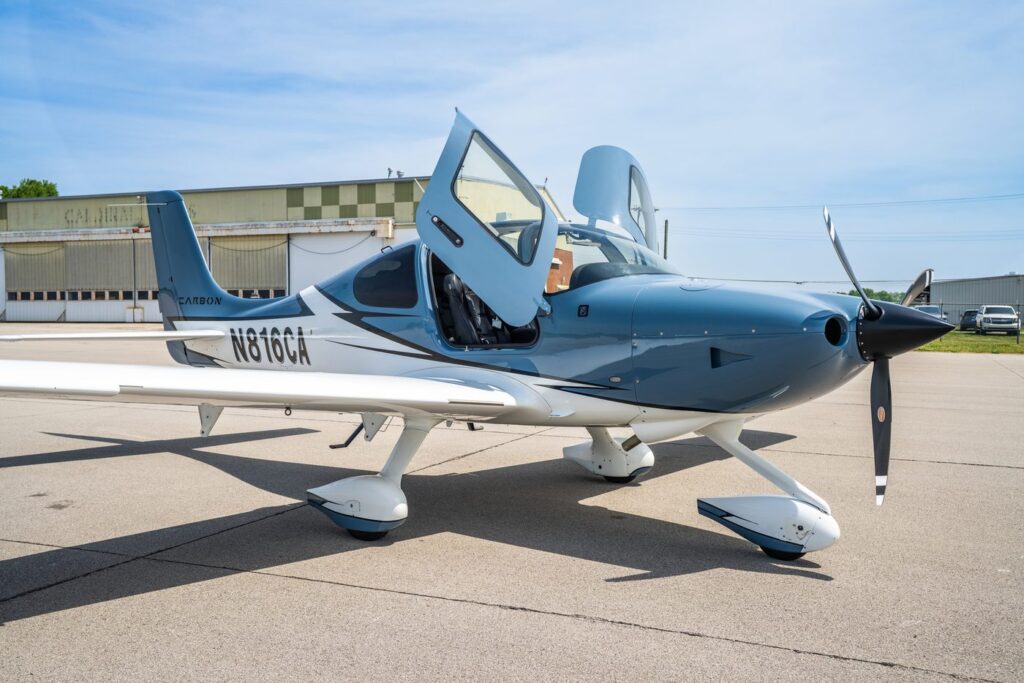
Fly with the school you are considering, with an instructor who works there, in an aircraft from the fleet you would actually train in. Pay attention to how the day is run as much as to the flying. Were you briefed properly beforehand? Did the instructor let you fly the airplane, or narrate while they did it? Did anyone sit down with you afterward and talk about what happens next?
When the flight is given and logged by an authorized instructor, that instructional time can count toward the aeronautical experience required for the license you pursue.
Where to start in Louisville
If you are weighing up options locally, the practical next step is to look at what a full training path actually involves, from a first lesson through to a license, and then come and see the operation for yourself.
You can read about the training pathways at Cardinal Wings Aviation on our flight training in Louisville page, or call the front desk on (502) 452-2115 and ask the awkward questions above. We would rather answer them now than have you find out later.
Come and see the operation
The fastest way to judge a flight school is to fly with it. A discovery flight takes about an hour, and the time is logged toward a pilot's license if you carry on.
Book a discovery flight


